
How to Choose Cookware That Lasts: Understanding Cookware Materials
You may waltz into a kitchen store intending to buy one frypan and leave rethinking your whole kitchen cupboard. It’s never just the one thing, and that applies to materials too. The different kinds of cookware in front of you aren’t competing for a single definitive crown. Stainless steel, cast iron and coated pans each excel at something different.
This guide translates what you find in the specs into what happens on your stovetop and in your sink. By the time you’re finished reading, you can work out which two or three deserve a spot in your kitchen.
In this guide
- At a Glance, Which Material Suits You?
- Stainless Steel
- Who It Suits: Skill Level and Everyday Use
- Non-Stick
- Who It Suits: Skill Level and Everyday Use
- Cast Iron
- Traditional vs Enamelled
- Who It Suits: Skill Level and Everyday Use
- Stone (Granite)
- Who It Suits: Skill Level and Everyday Use
- Ceramic
- Who It Suits: Skill Level and Everyday Use
- The Real Comparison: Which Materials Actually Belong in Your Kitchen
- Which Non-Stick Type Is Right for You?
- Concluding Thoughts
- Frequently Asked Questions
At a Glance, Which Material Suits You?
There’s no single best cookware material for each and every purpose. The right choice depends on what you like to cook most, how much care you’ll give a pan and whether you need to match the cookware to an induction cooktop.
- Stainless steel: best for searing, sauces and everyday cooking. Suits beginner to intermediate cooks, ideally once you've got the hang of heat control. Hand wash to preserve its shine.
- Non-stick: best for eggs, delicate food and easy cleanup. Suits beginners. Hand wash, no metal utensils.
- Cast iron: best for high-heat retention and long braises. Suits intermediate to confident cooks. Traditional needs regular seasoning, hand wash and dry immediately; enamelled is easier, hand wash with no scouring powder.
- Stone (Granite): best for oil-free everyday cooking. Suits beginners. Hand wash recommended.
- Ceramic: best for lower-heat, health-conscious cooking. Suits beginners, with a heat-ceiling caveat. Hand wash; avoid high heat.
Stainless Steel
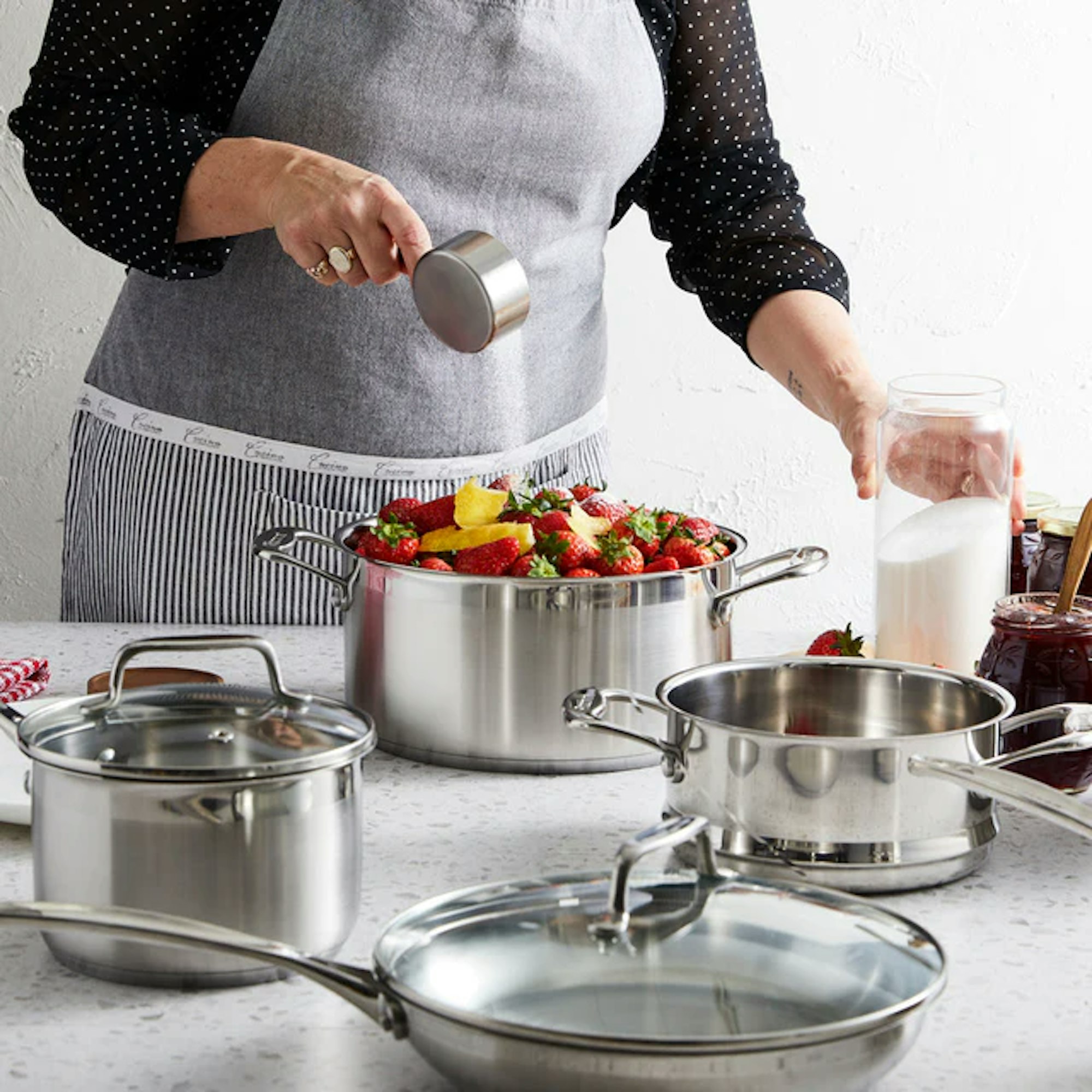
Stainless steel is your everyday reliable all-rounder. It’s non-reactive, oven-safe, and nearly impossible to wreck. All you need to learn is how to navigate heat control, since its weakness is conductivity. Stainless steel asks for just a smidge of patience because it moves heat at about 16 to 24 W/(m.K), which is slower than aluminium or copper, and it’s why some stainless steel cookware sets bond a better conductor into their base.
At House, we stock multi-ply stainless steel cookware with an aluminium core within our Tramontina Grano and Joseph Joseph ranges. The premium Tramontina Grano cookware range has tri-ply clad bodies consisting of aluminium between two stainless steel layers for faster, uniform cooking.
There’s also the Baccarat iconiX range that uses 18/10 stainless steel with a 5 mm impact-bonded base. Both ranges work on all cooktops, including induction. And although both are dishwasher-friendly, handwashing is recommended to keep the finish shiny and prevent any warping or pitting (small rust spots) from the extra-high dishwasher heat. If food does catch on the base, our guide to cleaning a burnt saucepan covers how to get it back to shine.
One real-world limitation to cooking with stainless steel is that acidic or salty food left standing can pit the surface, so it’s best to decant that tomato sauce instead of leaving it in the pan overnight.
Who Stainless Steel Suits: Skill Level and Everyday Use
Stainless steel suits you if you’re willing to spend about ten minutes learning about heat control. Preheat the pan for 2 to 3 minutes before the oil and food go in, work at medium rather than high heat, and sticking won’t be an issue.
You get a pan that survives metal utensils, the oven and over a decade of weekday meals. If you’re matching up to an induction cooktop, check that the base is magnetic, and our guide to induction cookware covers the rest of what you need to know.
Non-Stick
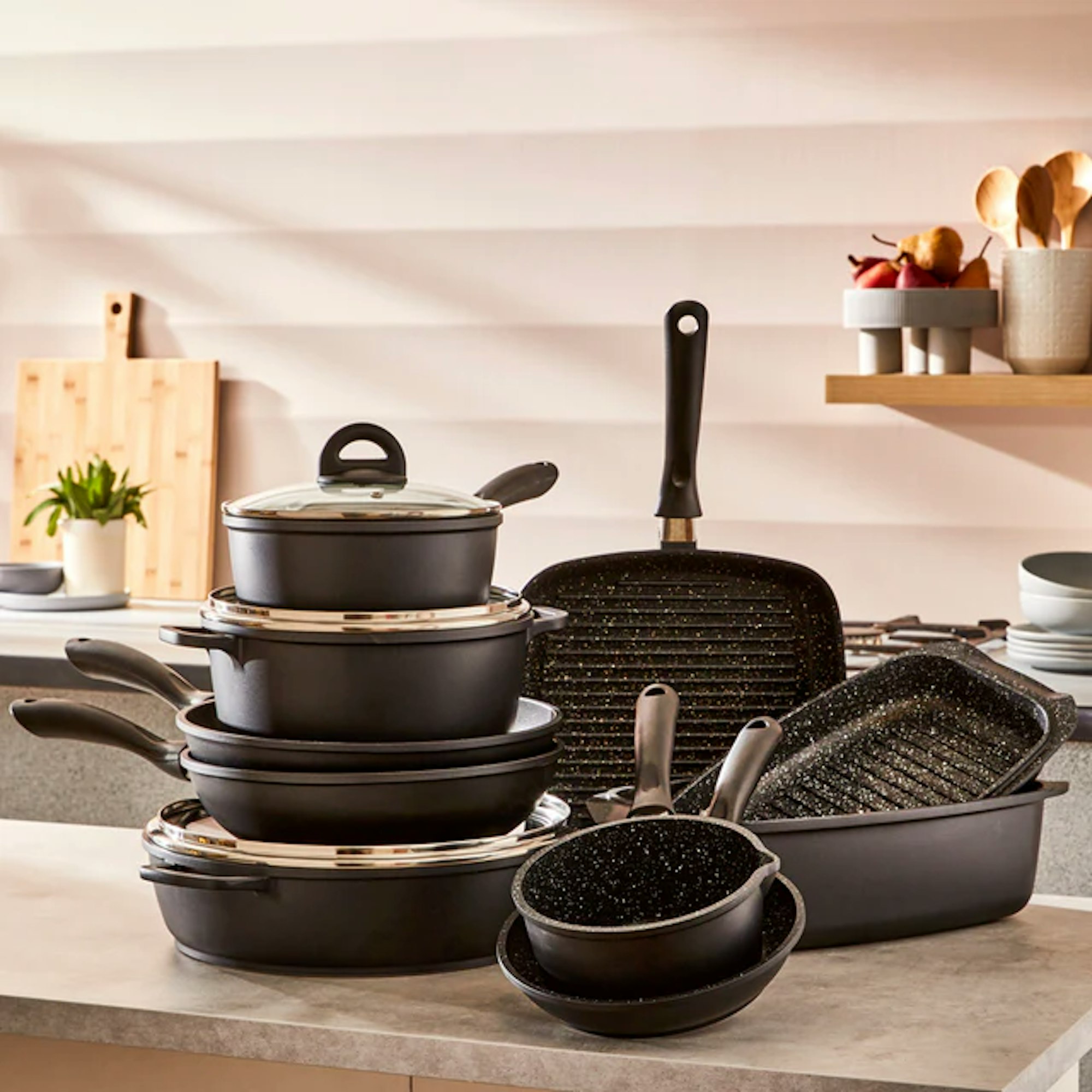
Non-stick is the most forgiving cookware surface you’ll find in your kitchen. It’s the coating, rather than the metal underneath, that determines how long it’ll last.
Most non-stick pans use a PTFE coating, popular for its food release capability and ten-second washing up. On safety, Oliver Jones, a professor of chemistry at RMIT, told ABC News that PTFE-coated pans are safe in ordinary use but shouldn’t be pushed to very high temperatures, and that a scratched pan should be discarded because the coating can flake into the food you eat.
So, when using non-stick cookware, keep it off a screaming empty burner, and replace it once the surface is scored.
Who Non-Stick Suits: Skill Level and Everyday Use
This is the right first pan for you if you’re completely new to cooking. Just make sure you use heat-resistant silicone or wooden utensils, not metal ones that’ll scratch the surface coating. Eggs, fish and pancakes are easy for anyone to cook on the non-stick pan.
Plan on replacing it eventually, and see cleaning a non-stick pan safely for what to do to stretch out its lifespan.
If you’re a culinary newbie (welcome, welcome), our guide to cookware for moving out of home will cover everything else that belongs in a first kitchen.
Cast Iron
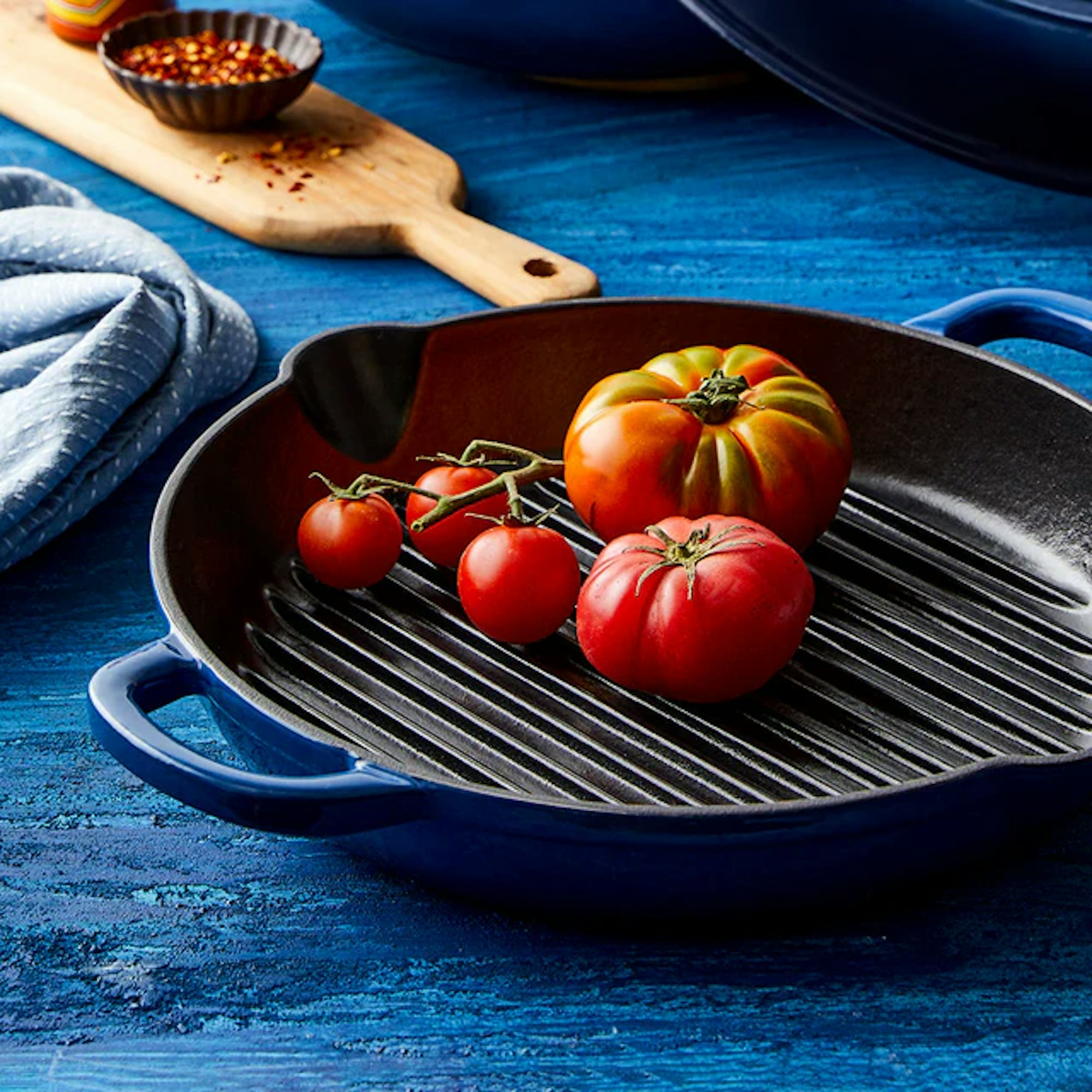
Cast iron holds heat longer than anything else mentioned here and outlives the other materials too, provided you choose the right version and care for it properly. Bear in mind that it’s slow to heat up, which people sometimes mistake for a fault. The thing is, once it’s hot, it stays hot, so a steak keeps searing when it hits the pan and even after you’ve turned the heat off. Keep tiny (and big) hands far, far away until it cools.
Traditional vs Enamelled Cast Iron
Traditional cast iron builds its own non-stick surface through continual seasoning. Pieces from Lodge and GRYLT arrive pre-seasoned and improve with use.
At House, we recommend hand washing cast iron pans in hot water with a stiff brush, never using harsh cleaners or soap, drying immediately afterwards, then wiping a thin film of oil over the surface. Metal utensils are fine to use here.
If you have an enamelled cast iron, you can skip this step because it has a glazed coating. The Baccarat Le Connoisseur enamelled range needs no seasoning thanks to a double-layer enamel. Its non-reactive glaze handles the tomato and wine-based sauces that’d strip a seasoned surface.
When cleaning, avoid using metal pads and scouring powder on it. Although it’s dishwasher-safe, hand washing is recommended. Dishwasher cycles can dull the enamel.
Who Cast Iron Suits: Skill Level and Everyday Use
Traditional cast iron will suit you if you’re happy to maintain a habit of drying and oiling your pan. Enamelled cast iron is for you if you want that heat retention without taking on a seasoning protocol, and if you like to cook acidic braises. Both types work on induction, and neither should be left empty over a high flame.
Stone (Granite)
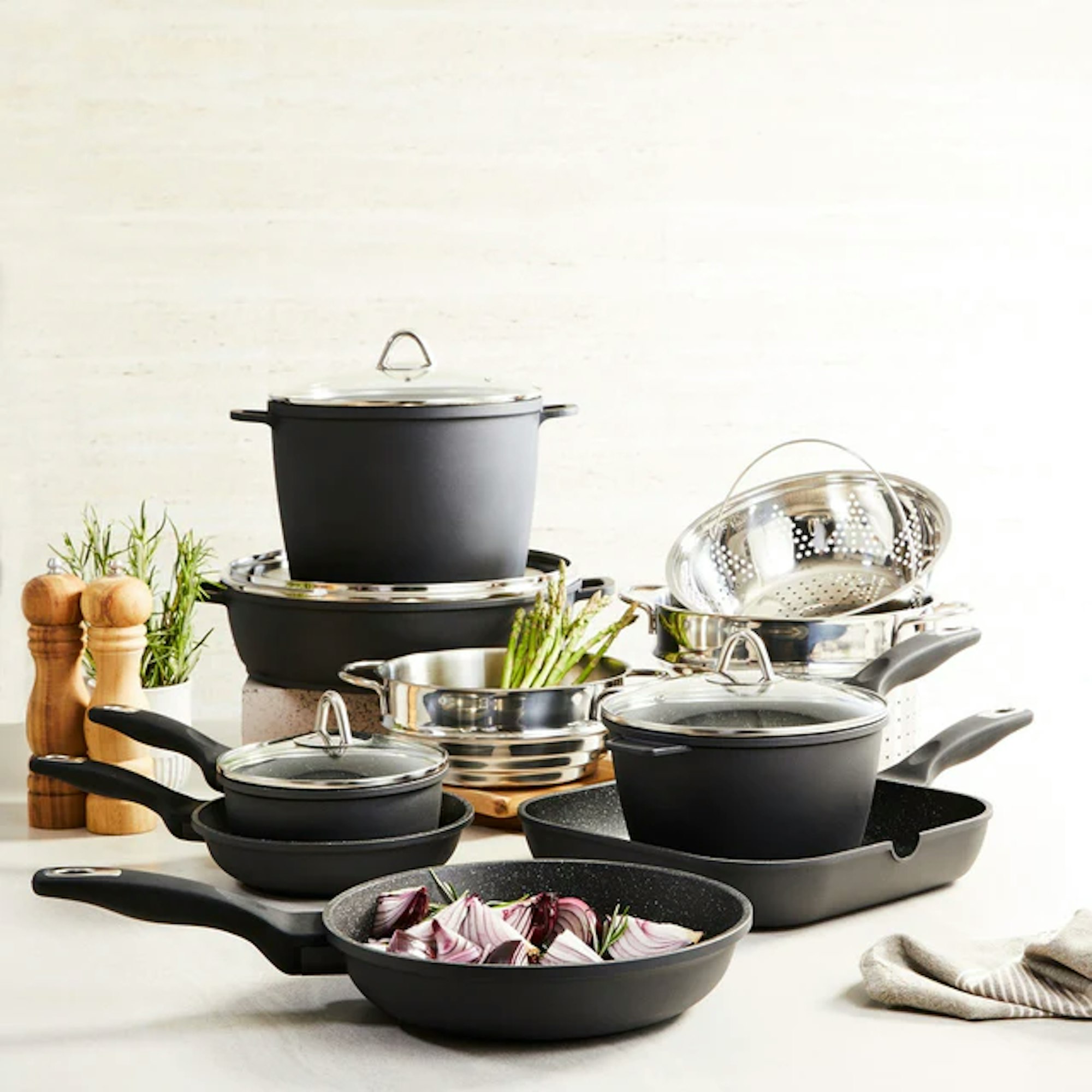
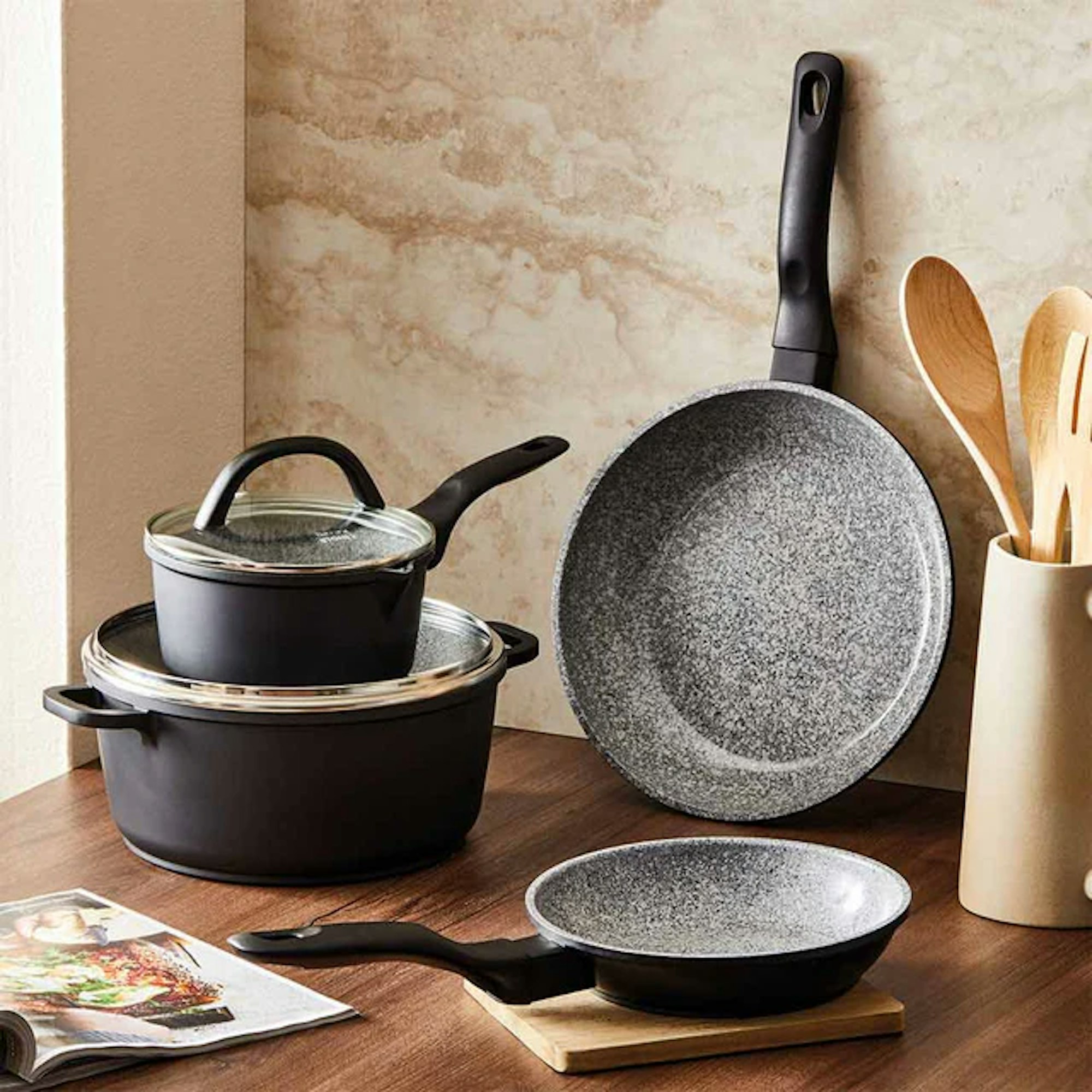
Baccarat STONE and Granite are the premium mineral-coated non-stick ranges at House, both made from cast aluminium with a PFOA-free coating for cooking with little or no oil.
Aluminium conducts well, so both ranges heat fast and spread heat evenly, and are sold with a hardwearing, scratch-resistant surface. Granite sets carry Heatflex induction plates and are dishwasher- and oven-safe to 150 degrees Celsius. This heat limitation is important to know because it makes this type of cookware suitable for stovetops, but not for roasting.
Who Stone Suits: Skill Level and Everyday Use
Stone is beginner-friendly and designed for everyday low-oil cooking, but not hard searing. If most of your weekly meals consist of vegetables, mince and quick stir-fries, this is the cookware for you.
Ceramic
Ceramic cookware uses a mineral-derived coating made without PTFE or PFOA, which is just what you want for oil-free cooking, though it compromises a little longevity.
Ceramic pans give you the non-stick performance without the traditional non-stick chemicals. The trade-off is that these coatings lose their food-release capability faster than PTFE does when heated to high temperatures over and over again.
If you sear your steaks in it several nights a week, you’ll notice it degrade within a year. But keep it to low and medium heat, and it behaves well for a long stretch of time.
Who Ceramic Suits: Skill Level and Everyday Use
It’s a good fit if you’re a newbie cooking at low to medium heat, but not ideal if you sear hard and often.
The Real Comparison: Which Materials Actually Belong in Your Kitchen
No single material is the absolute ‘holy grail’ for each and every kitchen. The best cooking pan material for frying eggs isn't suitable for a Sunday roast.
Heat Behaviour and Realistic Lifespan, by Material
- Stainless steel: even with a multi-ply or bonded base, it's slower to heat up. Realistic lifespan is years to decades with care; Baccarat's iconiX carries a lifetime guarantee covering manufacturing and material defects for 25 years from the date of purchase.
- Non-stick (PTFE): fast, moderate heat retention. Shortest realistic lifespan, effectively over once scratched.
- Ceramic: fast, with a lower heat ceiling. Shorter realistic lifespan than PTFE under repeated high heat.
- Stone / Granite: fast, even distribution on cast aluminium. Granite sets carry the Baccarat lifetime guarantee, covering manufacturing and material defects for 25 years from the date of purchase.
- Cast iron (traditional): slow to heat, retains heat the longest. Realistic lifespan is decades to a lifetime when seasoned and dried properly.
- Cast iron (enamelled): slow to heat, retains heat well. Realistic lifespan is decades, provided the glaze isn't chipped.
So, what works best in most kitchens? The combination that covers almost all your kitchen needs is straightforward: one stainless-steel piece for searing and sauces, one coated pan for eggs and delicate foods, one cast-iron piece for long, high-heat work. That’s just three pans, for three jobs, with no overlap.
Which Non-Stick Type Is Right for You?
It depends on how you want the coating to perform under heat and whether you're cooking oil-free. At House, we stock three families of coated cookware that do similar work. The main difference is how each is constructed and how well it handles heat.
Comparing the Three Coated Options
- Non-stick (PTFE): polymer coating basis. Not typically marketed for oil-free cooking. Best for all-round everyday cooking.
- Ceramic: mineral-derived, PFOA-free coating basis. Marketed for oil-free cooking. Best for lower-heat, health-conscious cooking.
- Stone / Granite: mineral-particle, PFOA-free coating basis. Marketed for oil-free cooking. Best for day-to-day oil-free cooking.
Concluding Thoughts
Once you know how the main types of cooking pots and pans behave and the care they ask for, knowing what to put in your cupboard becomes clear. You don’t need one do-it-all winner, only the right combination for the kind of cooking you actually do. If you’re replacing more than one piece, the Baccarat Gourmet and Swiss Diamond ranges are a great start, and our advice on building a full cookware set delves into kitting out your whole kitchen.
Frequently Asked Questions
Is stainless steel or non-stick better for everyday cooking?
Both are good in different pans. Stainless steel handles searing, sauces and anything heading into the oven. With the right heat-regulation technique, even ‘sticky foods’ like eggs don’t stick to stainless steel. Non-stick handles eggs, fish and quick cleanups more easily. Many people use one of each instead of choosing either one.
What’s the difference between stone, granite and ceramic non-stick coatings?
Stone and Granite are Baccarat mineral-particle coatings on cast aluminium. Ceramic uses a mineral-derived coating made without PTFE. All three are PFOA-free and suitable for low-oil cooking. Ceramic is the most heat-sensitive.
Can enamelled cast iron go in the dishwasher?
Yes. Baccarat lists Le Connoisseur as dishwasher-safe, though it still recommends hand-washing because dishwasher cycles can dull the enamel. Warm soapy water and a soft brush do the job. Just be sure not to use scouring powder or metal pads.
Do I need a cast-iron pan if I already have a good stainless-steel pan?
Not strictly, though they do different jobs. Stainless steel heats and cools more quickly, suiting sauces and fast searing. Cast iron holds the heat longer, suiting long braises and a steak with a proper crust. If you cook either of these frequently, it warrants having both.
Is ceramic non-stick cookware safe to cook with?
Yes. Ceramic coatings are made without PTFE and PFOA, and are popular for this reason. Keeping the heat low to medium protects the coating, too.
Is Baccarat cookware any good?
Yes, Baccarat’s iconiX cookware uses 18/10 stainless steel with a 5 mm impact-bonded base, which is induction-compatible and oven-safe to 220 degrees.
Baccarat’s Le Connoisseur cookware uses a double-layer enamel needing no seasoning. Most of the range comes with a lifetime guarantee covering manufacturing and material defects for 25 years from the purchase date.
Back to blog