How to Build a Dinner Set: Dinnerware, Glassware and Cutlery
A functional dining table needs three things sized in proportion to the household: dinnerware, cutlery and glassware. But buying all three as one boxed lot isn’t always the best route. For instance, the right number of plates doesn’t normally equate to the right number of glasses. So, it’s best to treat your tableware purchase as three interlinked decisions instead, and once you’ve determined how much of what you really need, the rest is easy.
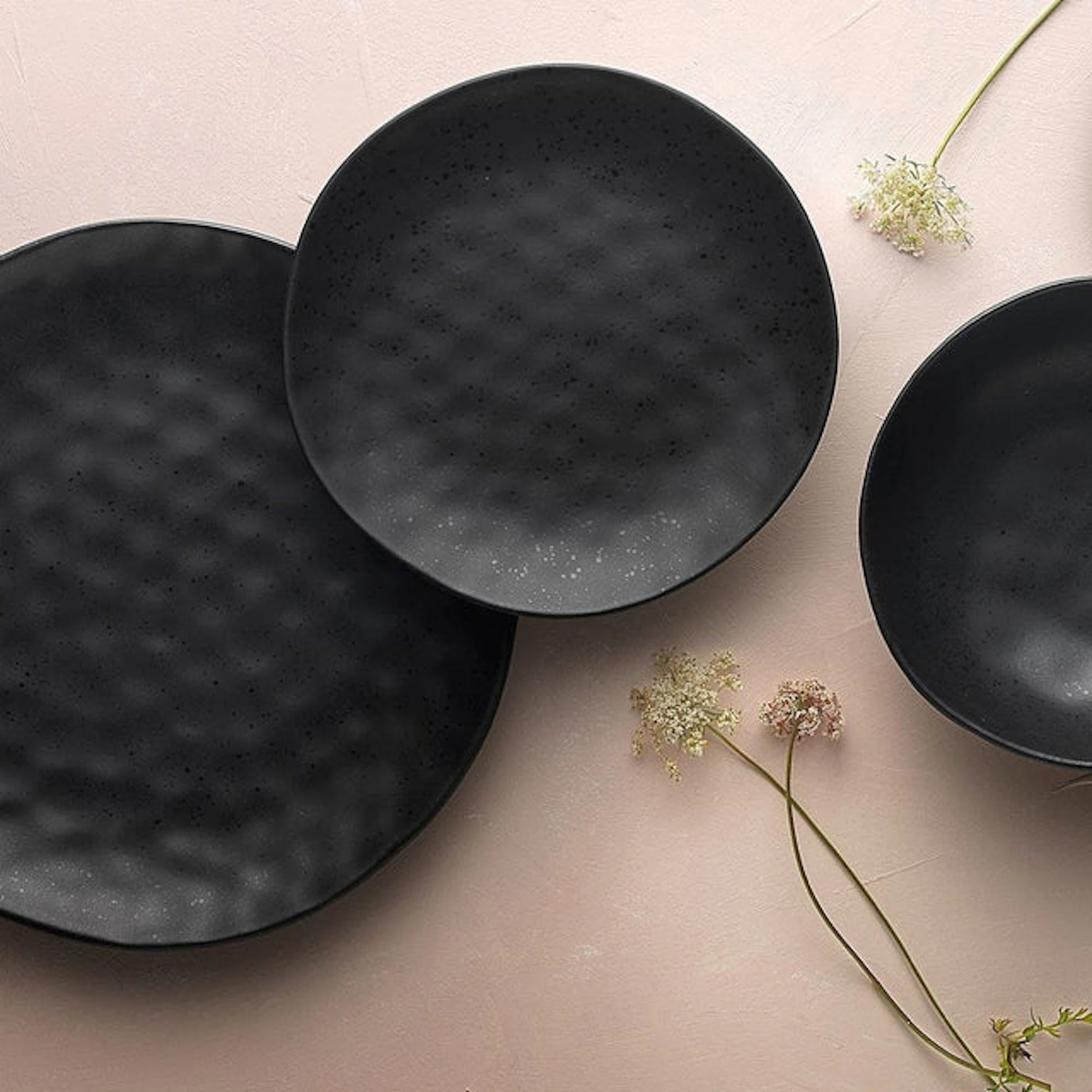
This guide helps you figure out how many pieces of each item you actually need and which material suits your household. You’ll also be able to weigh up whether it’s best to buy a set or fill the gaps over time. Take a look through this dining range as you read if you’d like to picture it.
In this guide
- How to Choose a Dinner Set: Start With How Your Household Eats
- Dinnerware: How Many Pieces and Which Material
- How many dinner plates, bowls and side plates you need
- Porcelain, stoneware or melamine: which material suits your household
- Cutlery Sets: How Many Pieces and What Each Piece Does
- Glassware Sets: The Glasses Most Households Need
- Putting It Together: A Place Setting That Works
- Buying a Set or Building Piece by Piece
- Dinner Set FAQs
How to Choose a Dinner Set: Start With How Your Household Eats
Start by gathering a few numbers before you delve into specific products. Ask yourself:
- How many people eat at home together on a usual weeknight?
- How often do you feed guests (and how many)?
- How much cupboard and dishwasher space do you actually have?
The first number sets your minimum number. The second is what can move the gauge from 12 pieces to 24, and it’s good to be clear about this, because household size on its own doesn’t justify the jump. A family of four who eat at home most nights and host twice a year need far less than a couple who have six people over once a month.
The third answer is the one buyers don’t take into account and sometimes get stuck on a practical level. Plates are heavy and bulky, and a 24-piece set needs the kind of shelf space most kitchens lack. So, assess your shelf situation, then think about one dishwasher cycle. If a full table of dishes won’t fit in one load, you’re likely to be stuck hand-washing the overflow each time you entertain.
Dinnerware: How Many Pieces and Which Material
Work out your piece count from your household size first, then choose a material that suits how you actually use it. A set is counted by the number of individual items, not place settings, so a 12-piece dinner set means four place settings of three pieces each rather than twelve plates. This configuration normally includes dinner plates, side plates and bowls that serve four people as the standard.
Once you’ve worked out how many place settings you need, you can search through the dinner sets by material type.
How many dinner plates, bowls and side plates you need
Buy for the number of people who eat at home regularly, then add what you’ll realistically need for hosting. The dinner plates are the pieces you’re likely to replace most often, so a set with spares in the cupboard beats one that leaves you short when one chips or gets broken.
- 1 to 2 people: 12 pieces (4 place settings); dinner plate, side plate and bowl for four. Add a second set of side plates if you host.
- 3 to 4 people: 16 to 20 pieces; everyday meals with spares when some are in the dishwasher. Add a serving platter and a large salad bowl if you host.
- 5 or more, or regular hosts: 24 pieces and up, or two matching 12-piece sets; a full table plus breakages. Add extra bowls and a second serving platter.
Porcelain, stoneware or melamine: which material suits your household
Choose porcelain for versatile everyday dining, stoneware for a more casual table, bone china for occasional entertaining, or melamine for households with young children and regular outdoor meals.
Porcelain is light in the hand and transitions from a weeknight dinner to a table with guests without looking out of place. Stoneware is heavier and more textured, which suits a relaxed table, though a stack of it takes extra shelf space.
Bone china is thin, surprisingly durable and priced for special-occasion tables. Melamine is chip-resistant and lightweight, making it useful around young children or by the pool throughout summer. It isn’t microwave-safe, though, which is worth considering if you regularly reheat food straight on the plate.
Table replacement:
- Porcelain: best for everyday use that still suits guests. Dishwasher safe; check the product page for microwave suitability. Watch for chips at the rim if stacked carelessly.
- Stoneware: best for relaxed, textured tables and casual entertaining. Dishwasher safe, though heavier to handle when full. Takes up more cupboard space than porcelain.
- Melamine: best for households with young children, outdoor and poolside dining. Dishwasher safe on the top rack, not for microwave use. Not suitable for hot oven-to-table service.
- Bone china: best for occasion tables and gifting. Check the individual product page, as care varies by range. Comes at a higher cost per place setting.
Cutlery Sets: How Many Pieces and What Each Piece Does
A cutlery set is also counted in individual pieces rather than settings. A 16-piece set is four settings of four. That is, four each of table forks, table knives, spoons and teaspoons, as seen in ranges such as the Ambrosia Orion and the Stanley Rogers Piper. Compare the cutlery sets available once you know your setting count.
Set sizes scale by adding settings, then by adding pieces per setting. A 24-piece set gives six settings of the same four pieces, which is the case with the Noritake Rochefort range.
At 56 pieces, there’s a change to what’s included. Stanley Rogers, Alex Liddy and Tramontina ranges all include eight settings of seven pieces: the standard four, plus a second knife and fork and a soup spoon. This setup is geared for a formal table with more place settings.
Some ranges also offer a 40-piece option, like the Alex Liddy Castella set, which extends to eight settings but keeps to five pieces: the standard four plus a steak knife. This suits a household that wants to seat eight without moving up to a full formal set.
Grade is another point of interest: 18/10 stainless steel contains more nickel, which is why it’s shinier. This is available throughout the House range in the Noritake and Stanley Rogers Piper sets. That said, lower-nickel 18/0 isn’t automatically the weaker buy. In fact, you’ll find the Stanley Rogers Noah set is 18/0 and still carries a 25-year warranty.
It’s best to read the warranty alongside the grade instead of treating the number as a ranking. Most sets are dishwasher safe, though some recommend hand washing. Check for this, especially for cutlery with titanium-coated finishes in black, gold or bronze.
One more thing helps a half-complete cutlery drawer. Some individual pieces are sold separately, so a drawer missing a few forks doesn’t need a whole new set to remedy the situation.
- 16 pieces (4 settings): couples and small households. Table fork, table knife, spoon and teaspoon per setting.
- 24 pieces (6 settings): families and households that host occasionally. The same four pieces per setting, six times over.
- 40 pieces (8 settings): larger households wanting full seating without the formal step-up. Table fork, table knife, steak knife, dessert spoon and teaspoon per setting.
- 56 pieces (8 settings): regular entertainers and larger households. Seven pieces per setting, adding an entree knife and fork and a soup spoon.

Glassware Sets: The Glasses Most Households Need
Most households only need glasses in just three shapes: one for water, one for wine, and one for spirits and beer. A glassware set built around these three will accommodate almost everything you pour, without a cabinet of specialist stemware.
And at House, you’ll find these categories in glassware ranges, including tumblers, highballs, stemless wine, martini, and beer glasses from Cellar and Alex Liddy.
It's good to buy within one shape family, so when a glass gets broken, you’re still left with a smaller matching set. There are many options for every aesthetic and practical consideration.
A stemmed glass keeps your hand off the bowl and better maintains the beverage temperature, while stemless wine glasses take up less cupboard space and suit casual and outdoor use. If your glasses constantly go through the dishwasher, stemless is your lower-risk choice.
Still, everyday glassware from lines like Alex Liddy, Ecology and Cellar Premium is dishwasher safe on a gentle cycle. Crystal from Riedel, Waterford and Luigi Bormioli is better washed by hand to avoid clouding.
- Tumbler: for water, juice and everyday drinks. Buy six to eight. It’s the most-used glass in the house, and the most often broken.
- Wine glass: red and white, in one shape, not two. Buy four to six; one versatile shape keeps storage to a minimum.
- Highball or rocks glass: for spirits, mixed drinks and long drinks. Buy four. Highballs of 300 to 450ml or rocks glasses at 240 to 350ml cater for entertaining without a full bar set.
- Champagne or prosecco glass: for occasions only. Buy four if the household celebrates at home; skip it if storage is tight.

Putting It Together: A Place Setting That Works
A standard place setting puts the fork to the left of the plate, the knife to the right with the blade facing in, and the spoon to the right of the knife. The side plate goes above the fork on the left, and the glass above the knife on the right. Dessert cutlery lies above the plate, handles pointing toward the hand that’ll use it. For a fuller treatment of a special-occasion table, our guide on how to style a dining table goes into further detail.
The overarching rule is to use cutlery from the outside in, so in a formal setting, the entree pieces are placed furthest from the plate. Of course, none of this needs to be precise for everyday meals. What it does give you is a check on your piece counts. If you can’t lay a full setting for everyone at the table, you’re short somewhere.
Buying a Set or Building Piece by Piece
A boxed set is cheaper per piece and guarantees you that everything matches. Building piece by piece suits a household that acquires pieces gradually as the need grows, or replaces one piece without touching the rest. An important factor isn’t price but whether the range is available to buy.
Before committing to a set, you may like to check if individual pieces are sold separately. If they are, a chipped side plate in three years constitutes one replacement instead of being the beginning of a mismatched cupboard. If they aren’t, then treat your set as a closed collection and buy slightly more than you may need right now. This is also the sensible way to approach a dinner set sale. A discount on a range that can’t be topped up later may create a future shortfall. The same reasoning applies to drinkware, where breakages tend to be more frequent but replaceability may become an issue.
Dinner Set FAQs
What is in a dinner set?
A dinner set contains a dinner plate, a side plate and a bowl for each place setting. A typical 12-piece set has four of each, serving four people. Larger sets accommodate additional settings, and some ranges add mugs or pasta bowls, so check the product description for the exact configuration.
How many pieces do you need in a dinner set?
Twelve pieces for one or two people, 16 to 20 for a household of three or four, and 24 or more for five people or regular hosts.
What is the best material for everyday dinner plates?
Porcelain or stoneware for most households, and melamine if you have young children or eat outdoors frequently. Porcelain is lighter and handles casual and formal use. Stoneware feels more durable, but the extra thickness requires a bit more storage. Melamine is chip-resistant but shouldn’t go in the microwave.
Do your dinnerware, cutlery and glassware need to match?
No. The practical rule is that one component can be the feature and the other two should stay plain. A patterned dinner set works with plain cutlery and clear glasses, and a gold or black cutlery finish works best against white plates. Matching all three isn’t necessary.
Make your decisions in this order: household size first, then material, then the three components, one at a time. Count the people, count the shelves, and buy for the way you normally eat day to day rather than for hosting once a year at Christmas.
When you’re ready, shop the dining range or start with the cutlery. It’s usually the part people notice first when it’s worn out.
Back to blog